

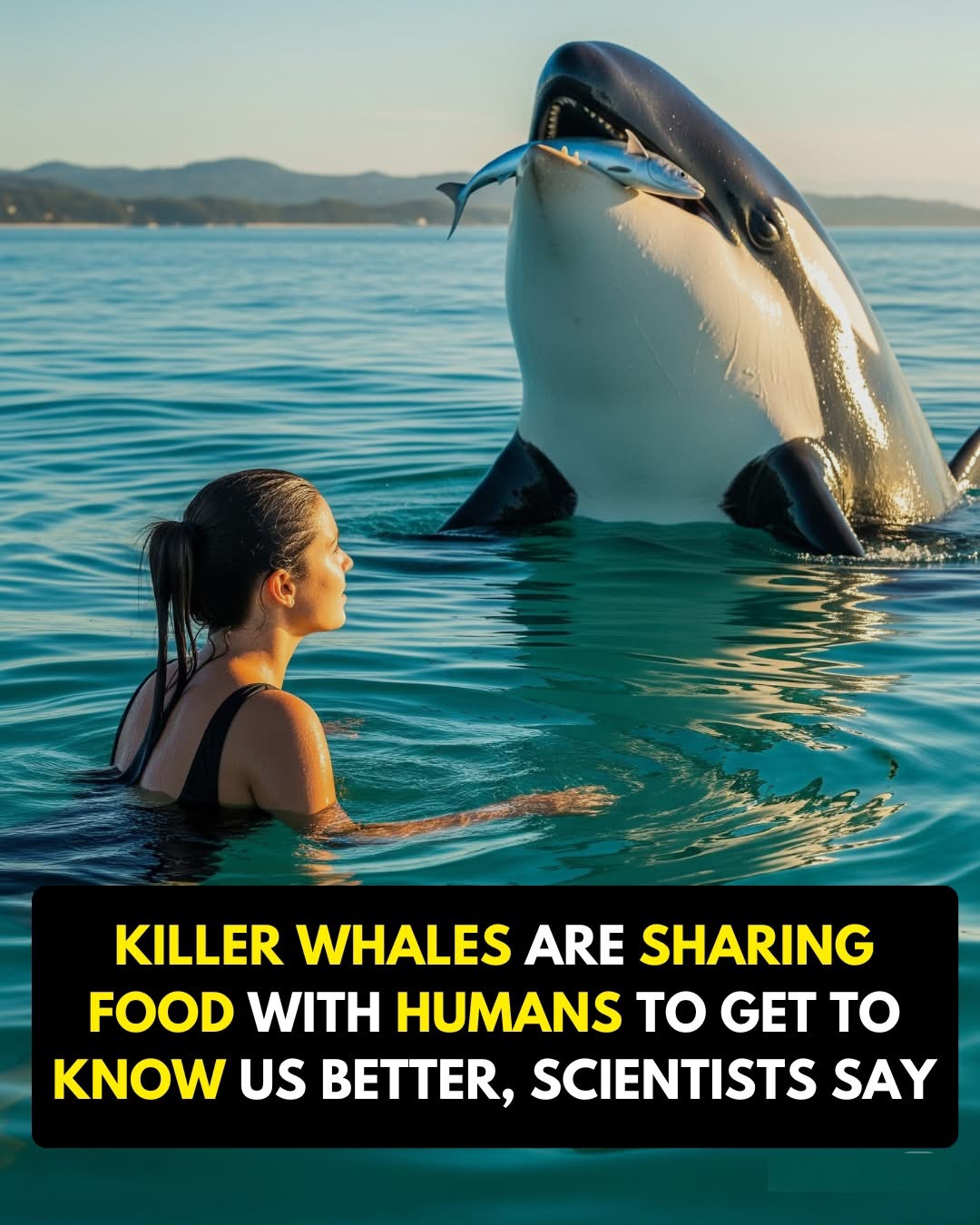
Killer whales, or orcas, are already renowned for their intelligence and tight-knit social groups—but new research suggests they might also be reaching out to humans in unexpected ways.
A study published in the Journal of Comparative Psychology documented 34 instances over two decades in which wild orcas voluntarily approached humans and attempted to share food with them.
These events occurred across a wide range of locations—including California, Norway, New Zealand, and Patagonia—and involved humans swimming, boating, or standing on shore. In each case, orcas brought prey such as fish or marine mammals and appeared to offer it to the humans, sometimes waiting to gauge their response. Remarkably, in seven cases, the orcas returned with food a second time after the initial offering was declined.
Among orcas, food sharing is a known social behavior used to reinforce bonds within pods, even between unrelated individuals. That they might extend this gesture to humans suggests a blend of curiosity, cultural behavior, or playful experimentation.
The researchers draw parallels to domestic animals like cats and dogs, which often bring food or prey to their human companions. In the wild, this orca behavior may reflect a desire to engage in cross-species social interaction—another testament to their complex cognition and emotional depth.